
Barriers Families Face in Supporting Math Fluency

Parents Want to Help, But Face Barriers
Every parent wants their child to succeed in math. But across underserved communities, parents often lack the resources, access, and confidence to fully support their child’s math development.
These challenges are not about effort—they’re about access, information, and empowerment.
Some of the Challenges include…
Limited Access to High-Quality Math Resources
Many families report that they don’t have access to reliable, culturally relevant math tools.
Fact: Only 38% of low-income families report having access to grade-appropriate math materials at home, compared to 71% of higher-income families. (Source: National Center for Education Statistics, 2024)
Shifts in How Math Is Taught
Modern math emphasizes problem-solving and conceptual understanding, while many parents were taught step-by-step memorization. Without guidance, this shift can create frustration and confusion at home.
Fact: In a national survey, over 60% of parents said they felt “confused” by how math is taught in schools today. (Source: Education Week Research Center, 2023)
Confidence Barriers
Many adults carry their own math anxiety from past experiences.
Fact: Research shows that 57% of adults experience math anxiety, and this anxiety can transfer to children, impacting performance and confidence. (Source: University of Chicago, 2022)
Systemic Inequities and Information Gaps
Parents in wealthier districts often have access to networks that share critical information about gifted placement, tutoring, and advanced math tracks.
Fact: In NYC, students placed in Algebra I by 8th grade are twice as likely to reach Calculus by 12th grade—yet Black and Latino students make up less than 20% of those early placements. (Source: NYC Department of Education, 2024)
Even the most dedicated parents can feel powerless, disconnected, or unsure how to help. Without access to clear, supportive information, children lose consistent math practice at home, one of the strongest predictors of fluency and confidence. The cycle of inequity continues: children internalize math anxiety, families feel excluded, and talent goes untapped.
Algorithm’s Response
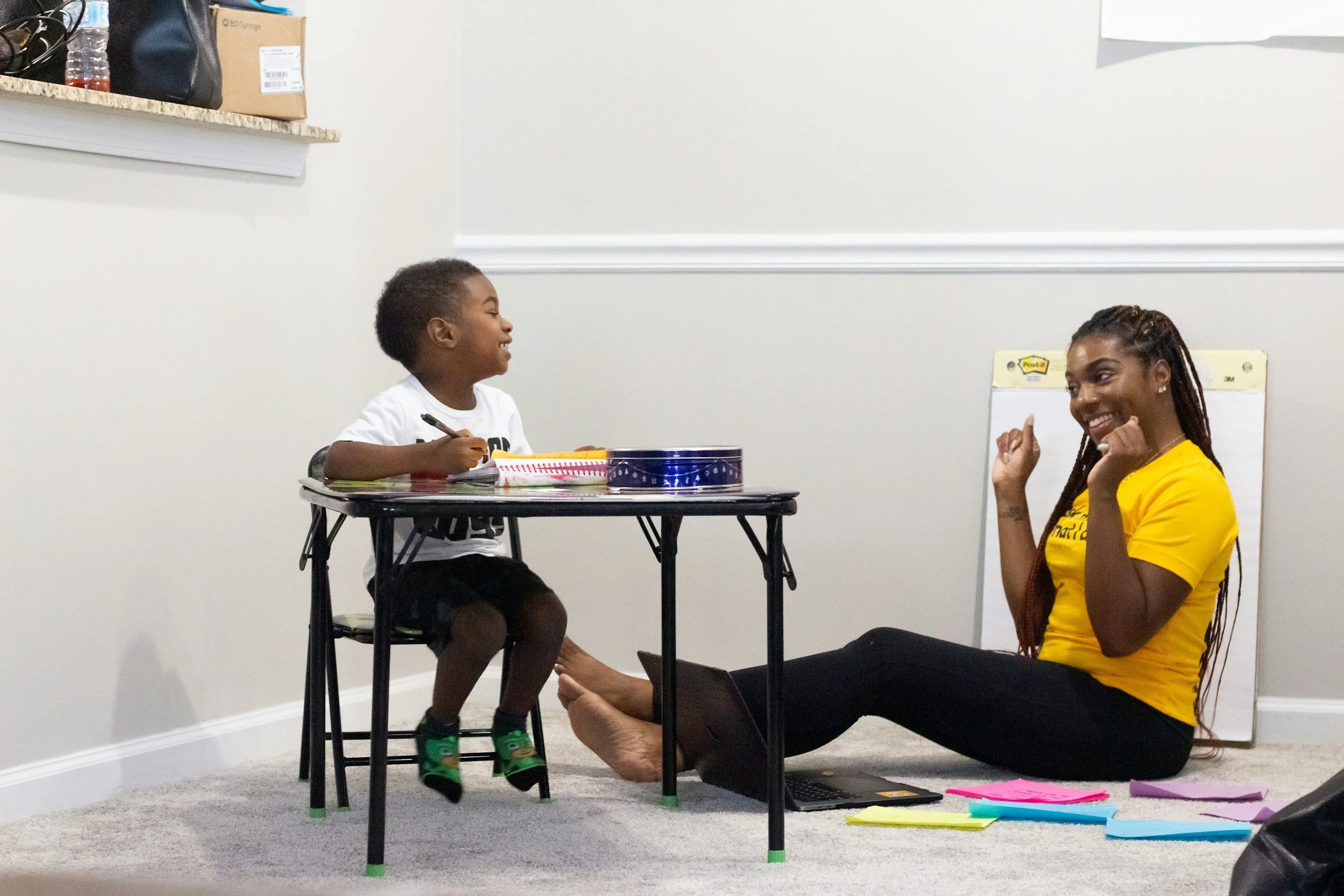
Algorithm believes that families are the foundation of mathematical success. Algorithm is helping to close the mathematical gap by creating a Parent Resource Hub. In this space, families can gain the knowledge, tools, and confidence to support their child’s mathematical journey.
Through workshops, guides, and community engagement, we empower parents to:
Understand what “math fluency” truly means,
Build positive math mindsets at home, and
Advocate for equitable access to advanced opportunities.
When parents are empowered, children are unstoppable.